A tech talks for thirty seconds after the job. That's the whole ask. No forms, no typing in the truck, no app to learn beyond tap and talk.
Nothing reaches a customer without review. Mentat drafts, your operator dispositions, and only approved work becomes an estimate. You stay the judgment in the loop.
Approved recommendations write back into Jobber as draft quotes, priced and attributed. Mentat is never your system of record. Your FSM stays the source of truth.
Recovered work is attributed to the technician who spotted it, by name. Noticing becomes visible, and visible work is work techs keep doing.
From driveway to draft quote before the truck leaves.
A minute of talking, that's the whole ask.
The tech finishes the job, opens Mentat on the phone they already carry, and talks for a minute. What they saw, what's wearing out, what the customer mentioned. No forms, no typing, no laptop in the truck.
A recorded memo in playback before it goes. Real product capture.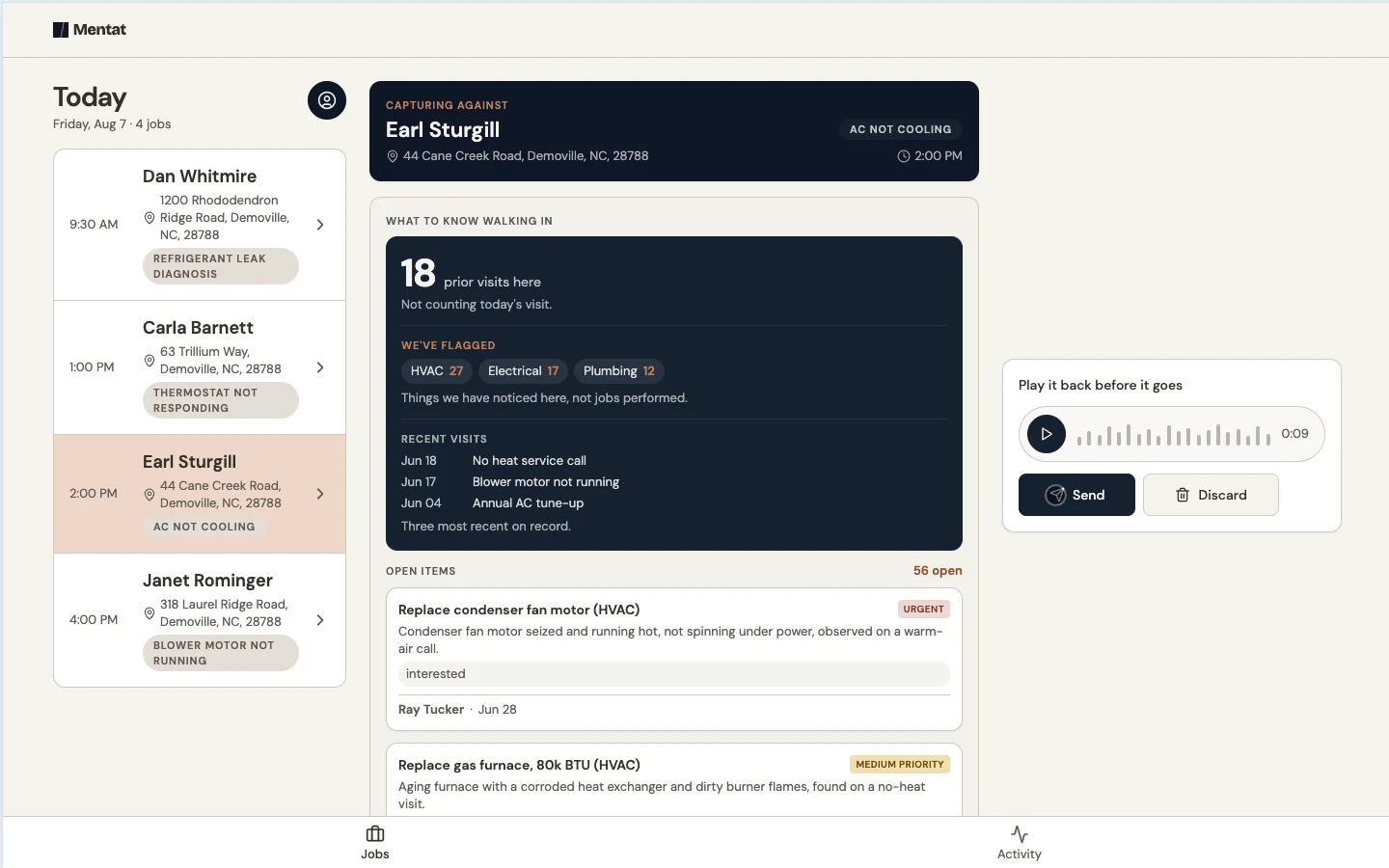
The memo comes back as a priced recommendation.
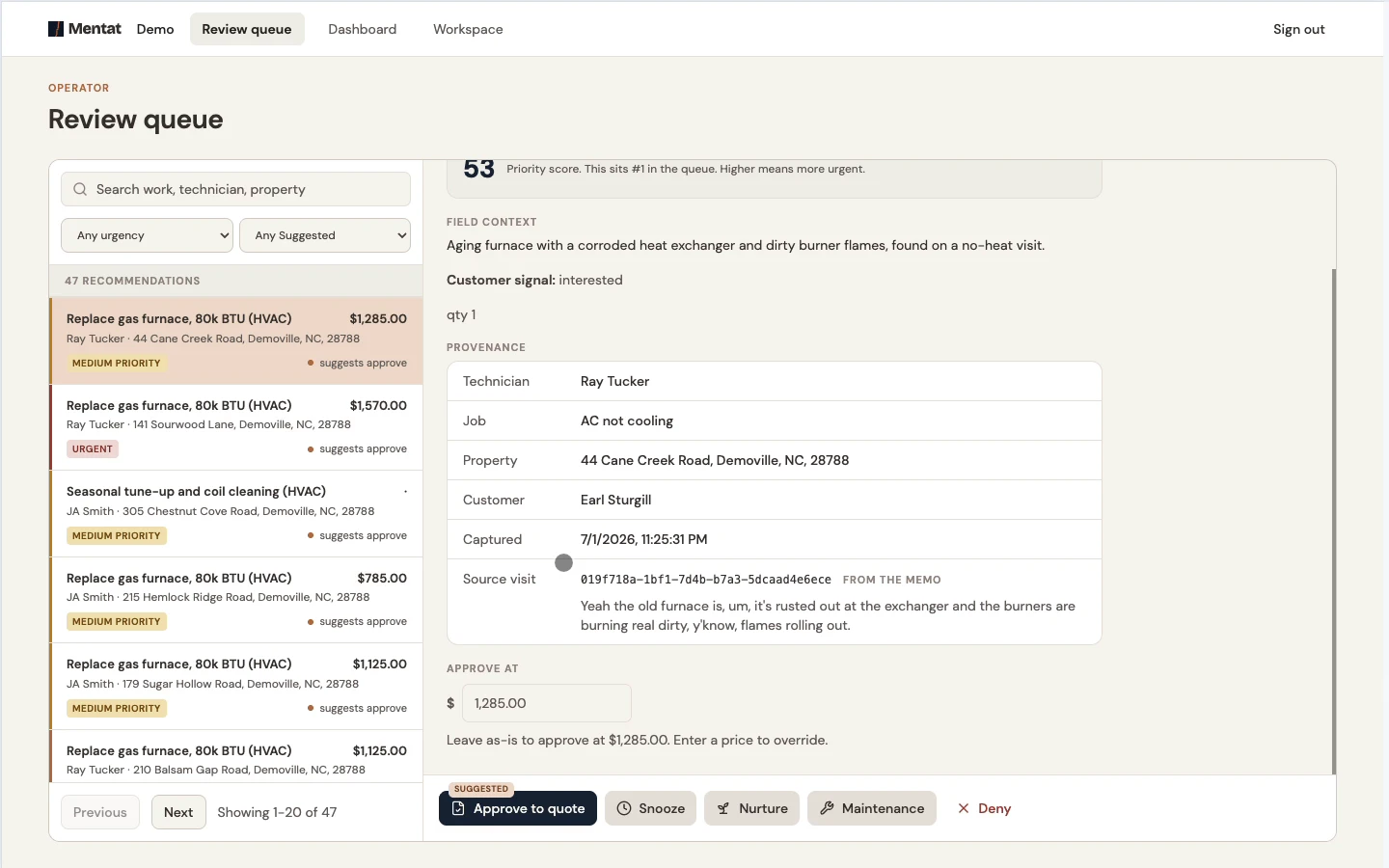
Mentat transcribes the memo and structures it into recommendations: what the work is, why it matters, what it should cost, how urgent it is. Each one is tied to the property, the unit, and the tech who spotted it.
One recommendation open to its price and the memo it was structured from. Real product capture.
Your click before anything moves.
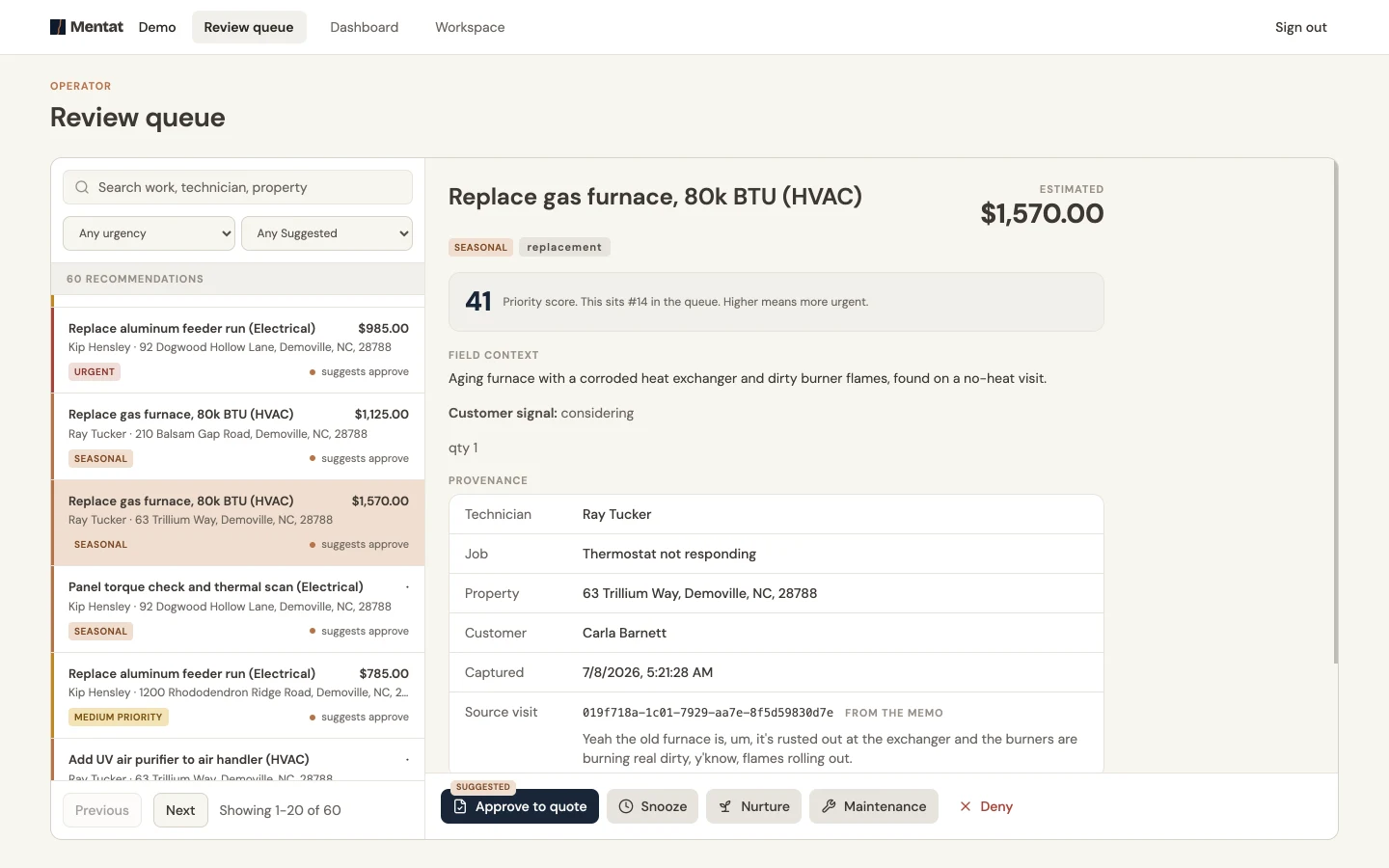
Everything lands in your review queue. You see the recommendation, the reasoning, and the price. Edit it, approve it, or kill it. Nothing reaches a customer without a human yes.
Operator review queue. Real product capture.
A draft quote, sitting in Jobber, credited to the tech.
Approved items write back into Jobber as draft estimates, ready to send. Jobber stays your system of record. Mentat never sends anything on its own.
Draft quote in Jobber. Real product capture.
Nothing moves without you.
AI drafts. Humans decide. Every recommendation passes through a person before it becomes a quote, so what your customers see is what you signed off on. Mentat speeds up the paperwork, not the judgment.
Nothing new to install. Nothing new to learn.
Mentat rides on top of the Jobber you already run. Techs use a web app on their phone. No hardware, no forms, no workflow changes. The only difference is the work they see actually gets captured.
Live on Jobber today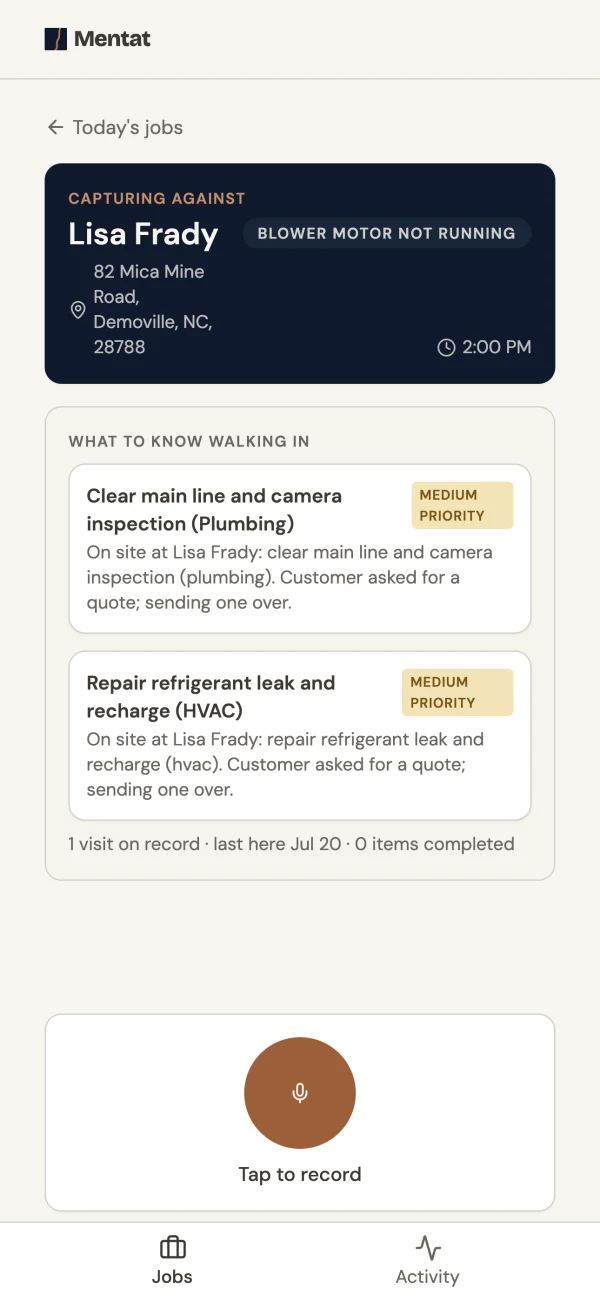
Common questions
How long does setup take?
Connect Jobber, and Mentat provisions your account in minutes. Technicians and their jobs are automatically synced. Most shops record their first memo the same day.
What do my techs have to do differently?
Talk for a minute after the job. That's the whole change.
What happens to my data if I cancel?
Your records stay readable. The property history your team built is yours, whether or not you keep paying.
Does Mentat send quotes to my customers?
No. Mentat writes draft estimates into Jobber. Sending is always your call.
Does it work with ServiceTitan or Housecall Pro?
Jobber is live today. ServiceTitan and Housecall Pro are coming.