The problem

Raise average ticket without the hard sell.

The fastest revenue you are not capturing is already on the visit. Your technicians notice work that needs doing on nearly every call, and most of it never becomes an estimate. Close that gap and average ticket and revenue per truck go up, with no new trucks, no new leads, and no asking a tech to sell.

The highest-leverage lever most shops have not pulled.

Operators call it opportunity capture, and it sits alongside dispatch and pricing as one of the few levers that lifts revenue per truck without adding headcount. Dispatch and pricing are mostly tuned in a well-run shop. Opportunity capture is where the slack still is, because the work gets seen on the visit and then lost before anyone can quote it.

Why it gets lost

Three frictions keep noticed work from ever getting quoted.

Not because techs are lazy or undertrained. Because of three things that have nothing to do with effort.

  1. Logging it

    More forms on a tablet at the end of a long call.

  2. Selling it

    Not the tech's job or their instinct. They are tradespeople, not salespeople.

  3. Following up

    Depends on someone, later, remembering.

Each one is a structural leak, not a coaching problem. Train harder against all three and you still lose most of it, because the system asks the tech to do the thing they are worst at and least paid for.

How big is the gap?

Big enough that operators already track it. The whole service model depends on the technician to spot the opportunity in the first place, and the most common reason it then vanishes is simple: it never got documented. That is why shops watch metrics like estimates given versus estimates sold, and set targets for how many visits should surface additional work. The revenue is not lost in the close. It is lost before the estimate ever exists. Field service revenue recovery is the work of closing that gap, recovering work that was noticed and never sold.

Doesn't our field service software already do this?

It does the second half, not the first. ServiceTitan, Jobber, Housecall Pro and the like are built to help a technician who is already selling build a good-better-best estimate, present it, and chase it if it goes unsold. All of that assumes an estimate exists. None of it captures the observation that never became one. That is the gap. The work a tech mentions in passing and never enters has nowhere to go. There is more on how this fits the system you run, and where it lands hardest for a PE-backed platform.

How you capture it without changing what techs do.

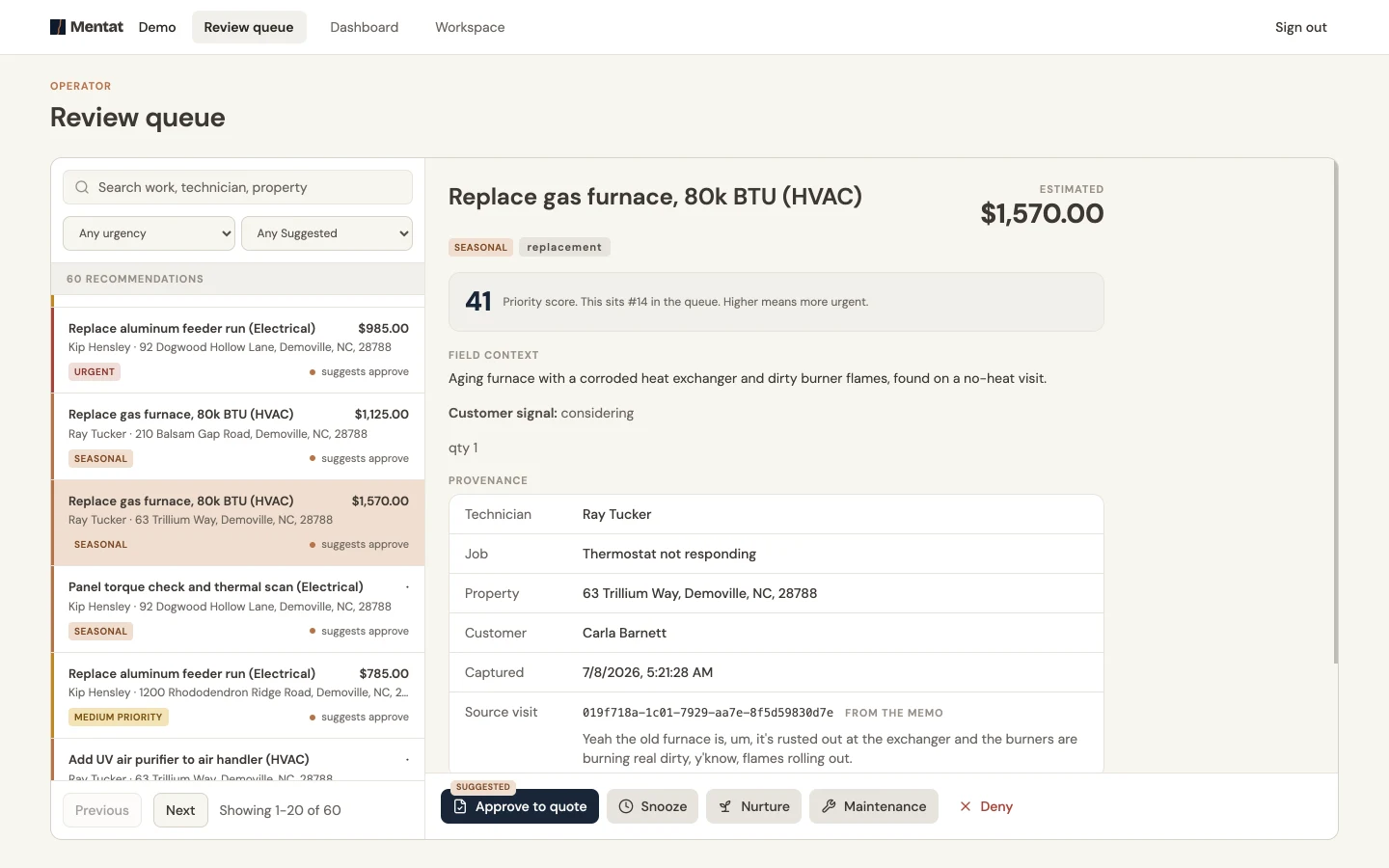
A short voice memo. The tech says what they saw, the way they already would to a dispatcher. Mentat structures it, prices it, and drafts the estimate back into the system you already run. One person reviews and sends. The work the tech spotted becomes revenue, and nobody had to sell it. The full loop runs from the memo to the estimate in your system.

And it compounds.

Every visit adds to what Mentat knows about that site, so the next technician arrives with the history instead of starting cold. On day one the value is the loop catching work that used to slip away. Over time it becomes a record of every property that makes each visit sharper than the last.